The Alignment Deficit: Why Narrative Architecture is the New Corporate Diplomacy

The Mechanics of Momentum: Orchestrating Cohesive Motion
My father, a 73-year-old pragmatic observer, recently expressed regret over the loss of substance in modern leadership. Did communication become synonymous with hollow announcements using glossy branding to mask a lack of vision or project? What is the actual point of ‘comms’? Isn’t it all just hot air used to dress up reality?
These pragmatic, almost brutal questions reflect a profound truth in today’s industrial and diplomatic landscapes: there is a growing alignment deficit.
Whether you are launching a €300M asset like the Zoofenster in Berlin or steering global conversations at MIPIM, the bottleneck is rarely the technical data. It is the lack of a shared narrative capable of moving diverse, and often conflicting, stakeholders in the same direction.
Yet, history reminds us that the greatest leaders never decoupled action from symbolic construction. They understood that to forge a modern, sovereign state, to unify a fragmented region, and to engineer cohesive identities, one must first build an indispensable strategic infrastructure.
State-Building in Egypt: Historian Henry Laurens reminds us that it was during his transformative reign in the early 19th century (1805–1848) that Muhammad Ali, an Ottoman officer of Albanian origin, succeeded in forging a common identity that transcended social and ethnic divides to lay the foundations of the modern Egyptian.
The Unification of the Islamic World: It was Saladin, the first ruler of the Ayyubid dynasty of Kurdish origin, who managed to unify a mosaic of divergent interests in the 12th century, transforming the Islamic world into a coherent collective movement against the Crusaders through a powerful narrative of religious and geographical unification.
In these instances, narrative was not an « afterthought. » It was the foundational infrastructure that enabled Stakeholder Engagement and long-term Strategic Influence.
In today’s global matrix environments, communication is not « venting »; it is the structural engineering of alignment.
Without a core narrative, there is no collective movement—only a fragmented assembly of interests.
The Anatomy of the Alignment Deficit: A Semantic Crisis
The Death of Top-Down Communication
In the post-WWII industrial boom, communication was viewed as a simple linear pipe — with an encoder sending a message to a receiver — on a one-way persuasion or simple message transmission. As environments became more complex, the limitations of linear messaging became apparent, with the 1970s marking a pivotal « transitional stage » in communication theory, moving towards the manifestations of relationships and the rules of interaction in complex systems.
In our current Post-Multilateral Era, the linear messaging model is not just obsolete; it is a liability.
We have fully transitioned into an era of ‘Relational Communication’, implying thatif the relation is not established first, the message is instinctively rejected. It is the end ofthe ‘top-down’ era, with a shift from an attention to volume and the primary metric, towards adhesion and engagement.
At the heart of this shift is a move from Storytelling to Storydoing. The challenge is to move from Traditional marketing told a story to sell; modern leadership and modern communications require both: a proof of action, and a radical alignment of values.
In other words, adhesion and alignment are now prerequisites for being heard. Informing is no longer sufficient.
it isn’t about making more content or more noise anymore, because if the alignment is absent, the message will get lost in the noise. If our narrative is fragmented, your positioning will seem unclear, and you’ll either be misrepresented or missed entirely.
I believe this is why traditional governance models and PR campaigns are falling short. They are no longer fit for purpose in a world demanding sustainable impact, shared values, and authentic commitment. Consistency is required across the entire 360° spectrum, both online and offline: your teams, your client messaging, your social media, as well as your CEO’s values and how they are truly embodied in their leadership presence towards both clients and staff.
In my experience across diplomacy and global business, most transformation or positioning strategy failures are not technical, financial, or even a lack of will; they are narrative.
Whether managing a global real estate summit like MIPIM, driving value for a €300M asset launch, or representing 160 families within a local institutional framework, the core challenge remains the same: how to synchronise divergent interests into a single, actionable narrative.
In my sphere of complex international environments—where driving multi-stakeholder projects is the norm—this principle is more fundamental than ever. Each player arrives with a distinct value system and a proprietary lexicon: the investor prioritises ROI and risk mitigation within specific yield timeframes; the politician, a ‘custodian’ of their office, focuses on Rayonnement and Institutional Influence, ideology, and the timeframe linked to their public mandate.
The most significant barrier is rarely technical data or financial liquidity—it is a Semantic Crisis.
ChangeNOW 2026: A Real-Time Case for Radical Alignment
As we navigate the complexities of 2026, the ChangeNOW 2026 edition serves as a real-time laboratory for ‘Radical Alignment’, as the sustainable transition is currently facing a « semantic crisis ». Global leaders at the summit all agreed on one thing: the solutions exist, but without a ‘Shared Cognitive Framework’, the transition from ‘Storytelling’ to ‘Storydoing’ remains stagnant. Many perspectives echoed throughout the event.
First, true stakeholder alignment requires us to reframe the core conflicts. Julia Maris (Executive Vice President, Corporate Secretary at ENGIE) highlighted that the challenge lies in reframing the Narrative to act as a bridge, moving aways from treating ‘profit’ and ‘change’ as opposing forces. Alignment means bringing shareholders into a shared narrative where these objectives coexist, built upon a dedicated ‘Infrastructure of Cooperation’.
From Silos to Synthesis
In her 2017 TEDxAix talk, Julia Maris (ENGIE) advocates for reclaiming the « invisible »—the inherent security we take for granted—by re-appropriating our collective lexicon. Narrative Architecture applies this same rigour to the corporate world. By making the « invisible » work of Corporate Diplomacy visible, we create a structural blueprint that secures the strategic environment for long-term action.
Secondly, the words we choose dictate the boundaries of our success. Brune Poirson (Founder of Udaan Advisory and former State Secretary) rightly warns that a ‘punitive’ vocabulary blocks transition and breeds resistance. As an Architect of Alignment, my role is to design a ‘Lexicon of Possibility’ anda framework where stakeholders are engaged as active contributors rather than mere recipients of information.
Thirdly, success depends on ‘Co-design’. As Jeremy Rogers (CIO at Better Society Capital) suggests, high-stakes projects demand both ‘humility at the table’ and collective intelligence. This reflects a fundamental shift in Social Capital: in complex matrix structures, power is no longer a product of hierarchy. Instead, it is found in the ability to bridge perspectives and engineer a unified direction.
Fourthly, the Leadership Mindset is the ultimate determinant. A clear narrative direction—the compass—must be paired with robust execution—the engine. As Angeles Garcia-Poveda (Chair of the Board at Legrand) suggests, success depends on leaders whose curiosity exceeds their ego. Whether in luxury real estate or global diplomacy, ‘Humility at the table’ is a strategic competence; it allows us to unlock complex deadlocks where dogmatism fails.
By integrating the planet as a silent stakeholder, inspired by Paul Polman’s ‘Net Positive’ vision of placing a chair for the Planet Earth and one for Future Generations in the boardroom, we move beyond simple business-as-usual.
The consensus is clear: whether we are navigating national security or corporate transition, success is no longer a product of top-down command. It is the result of a deliberate ‘Infrastructure of Cooperation’—one built on humility, a shared lexicon, and the courage to reframe old conflicts.
This is where the role of the Narrative Architect becomes vital. It is not about generating noise or aesthetics; it is about the fundamental engineering of consensus.
Narrative Architecture: The ‘Structural Engineering’ of Consensus & High-Stakes Stakeholder Alignment
Success does not stem from a ‘megaphone’ (generating noise) or ‘glitter’ (mere aesthetics); and it is certainly not found in the reactive cycle of constant firefighting. Instead, it is built upon infrastructure: Narrative Architecture.
Just as a physical building requires a blueprint before the first stone is laid, a complex project requires a ‘Shared Cognitive Framework’ before any message is delivered. Without a 360-degree Blueprint, the project suffers from a ‘Cohesion Deficit’—where stakeholders operate in silos, driven by fragmented interests. The framework ensures a total alignment between corporate objectives and individual purpose, providing the evidence-based action required to prove commitment. Without this foundational integrity, even the most sophisticated strategy will succumb to inertia, failing to anchor stakeholders to a shared strategic goal.
Here lies the essence of being an ‘Architect of Alignment’: building the narrative foundations that allow diverse, and often conflicting, stakeholders to move in the same direction. Towards meaning; towards impact; towards success.
To move beyond the ‘Tower of Babel’ and lexical fragmentation, complex and international projects require a North Star. Narrative Architecture provides a strategic compass. Rather than allowing visions to collide, this structural framework ensures synergy, aligning divergent interests towards a single, unified goal. It turns complexity into cohesive impact and eliminates inertia.
Beyond storytelling, Narrative Architecture acts as the structural catalyst that turns fragmentation into synergy. Aligning Narrative, Influence, and Action.
As an Alignment Architect, I bridge the gap between Financial Imperatives and Social Licence using the Narrative Architecture Framework.
Narrative Architecture is not a decorative layer of ‘communication’; it is the structural engineering of consensus & High-Stakes Stakeholder Alignment. It enables about constructing the framework of trust essential for decisive action. A genuine ‘paradigm shift’, synchronising influence and action to transform fragmented interests into a competitive advantage.
It is not a simple change of words; it works towards removing the friction between diverse perspectives, enabling seamless collaboration, and allowing global teams to function as one: from Paris to Abu Dhabi, Hong Kong, and New York.
Narrative Architecture is not about fabricating stories; it is about constructing the framework of trust essential for decisive action.
This methodology provides the practical delivery system for the Cultural Intelligence (CQ) I have previously discussed. If CQ is the engine, Narrative Architecture is the vehicle that steers it toward global growth.
Proof of Concept: Narrative Architecture in Action
Beyond storytelling, Narrative Architecture acts as the structural catalyst that turns fragmentation into synergy.it is the load-bearing structure that holds a project together from its inception.
The efficacy of Narrative Architecture is best measured through its ability to resolve the ‘Alignment Deficit’ across vastly different scales—from building global legitimacy and driving conversion at a macro level, to securing a ‘Social License to Operate’ for discrete investments, and engineering social stability during systemic institutional crises.
Building Global Real Estate Leadership and Legitimacy: MIPIM, the Davos of Real Estate
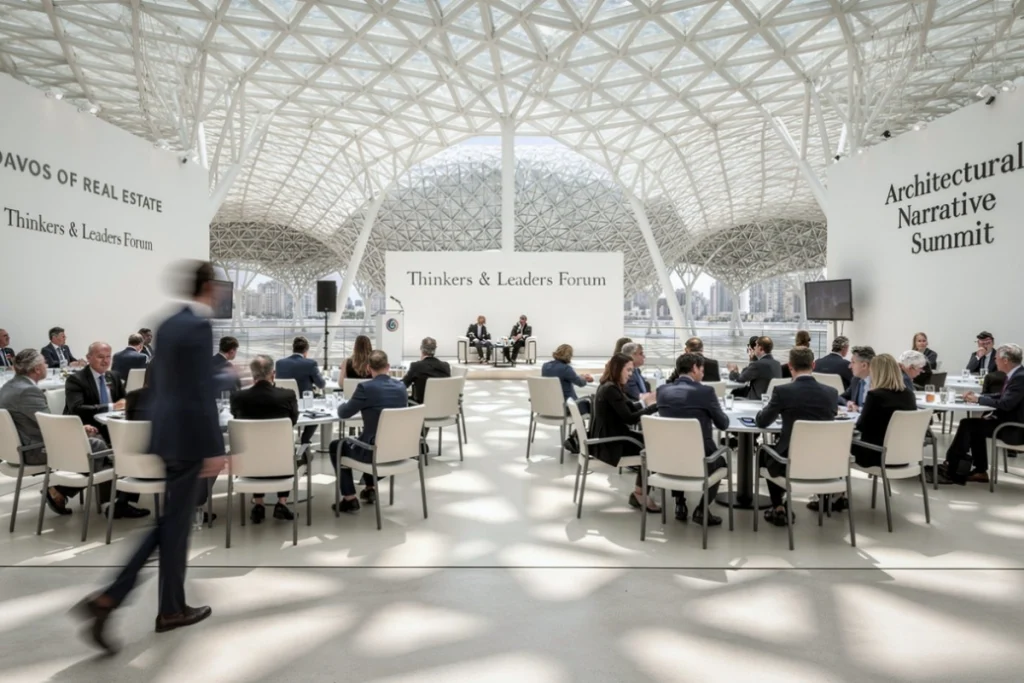
When I authored and spearheaded the Global Editorial Strategy for MIPIM —the ‘Davos of Real Estate’—I wasn’t just managing words; I was managing complexity at a global scale.
My role was to build a structure capable of engaging this entire value chain:
- Hospitality Tenors: Accor, Hilton, B&B HOTELS, Covivio, and InterContinental Hotels Group (IHG).
- Healthcare Giants: Primonial REIM (Praemia), Icade Santé, Clariane (formerly Korian), emeis (formerly Orpea), DomusVi, and Swiss Life Asset Managers.
- Institutional Investors & Global Fund Managers: A prestigious assembly including AXA Investment Managers – Real Assets, Greystar, BlackRock, Brookfield Asset Management, Allianz Real Estate, GIC (Government of Singapore Investment Corporation), and Norges Bank Investment Management.
- Family Offices & Private Equity: Goldman Sachs Asset Management, Blackstone, and prominent European Family Offices specializing in mixed-use urban assets.
- Institutions and Key Political Leaders: A strategic network encompassing the World Economic Forum, the OECD, and EUROCITIES, alongside a high-level assembly of decision-makers including the Mayors of London, Paris, and Rome, as well as Ban Ki-Moon (Ban Ki-Moon Centre for Global Citizens), Günther Oettinger (European Commissioner), and the Mayors of Warsaw, Stockholm, and Florence.
My Narrative Architecture served as the strategic backbone for a vast global ecosystem where each stakeholder spoke a different language.
Using the Narrative Architecture Framework, I dissected the industry’s most pressing challenges—across asset classes, global capitals, local communities, and regulatory shifts—and translated them into a shared mission.
This cognitive alignment ensured divergent interests (ROI, sustainability, political mandate) were structurally integrated into the summit’s core DNA, making them complementary forces to the ‘Davos of Real Estate’ and the worldwide influence of a +30 years old Thought Leadership Event.
By synchronising the interests 500 speakers across 150 conferences and events, I created a ‘Shared Cognitive Framework’. The 360-degree Blueprint engaged a massive ecosystem involving 26,000 participants from 100 countries, including +400 elected officials, alongside the world’s most influential CEOs and institutional investors (LPs/GPs), within a €55M turnover portfolio. Through my pen, they co-designed the world of tomorrow.
Breaking the Silos with the ‘Health and the City ‘. In 2019, I identified a « Cohesion Deficit » in how the industry approached the healthcare sector: it was treated as a mono-thematic « silo ».
I broke through these boundaries by co-designing the ‘Health and the City’ format. This multidisciplinary approach aligned the interests of healthcare funds and urban planners, featuring leaders such as Andrew Ovey (AXA Investment Managers – Real Assets), Michela Hancock (Greystar), and Alice Charles (World Economic Forum).
This shift of focus from a peripheral topic to an urban priority secured strategic sponsoring (50k).
Bridging the Institutional Gap with The Political Leaders Summit (PLS). In 2020, I served as the Architect of Alignment to bridge a long-lasting gap between business-centric goals and the sovereign priorities of political leaders. Using the Narrative Architecture Framework, I managed a landmark editorial partnership with EUROCITIES (200 cities across 38 countries), reaching over 6,000 leaders, and defined a new value proposition focusing on resilient, inclusive, and citizen-centered cities as our common lexicon. The new Political Leaders Summit (PLS) it featuredsaw a +300% increase in participants (90 PAX vs 30 in 2019) with 100% room occupancy. I also successfully converted the targeted Nordic markets, attracting new speakers such as the Mayors of Stockholm, Tallinn, Turku, and Helsinki.
In high-stakes environments, Narrative Architecture is the ultimate lever for building global legitimacy and driving conversion at scale.
Bridging the Capital-Culture Divide: The Zoofenster Project in Berlin
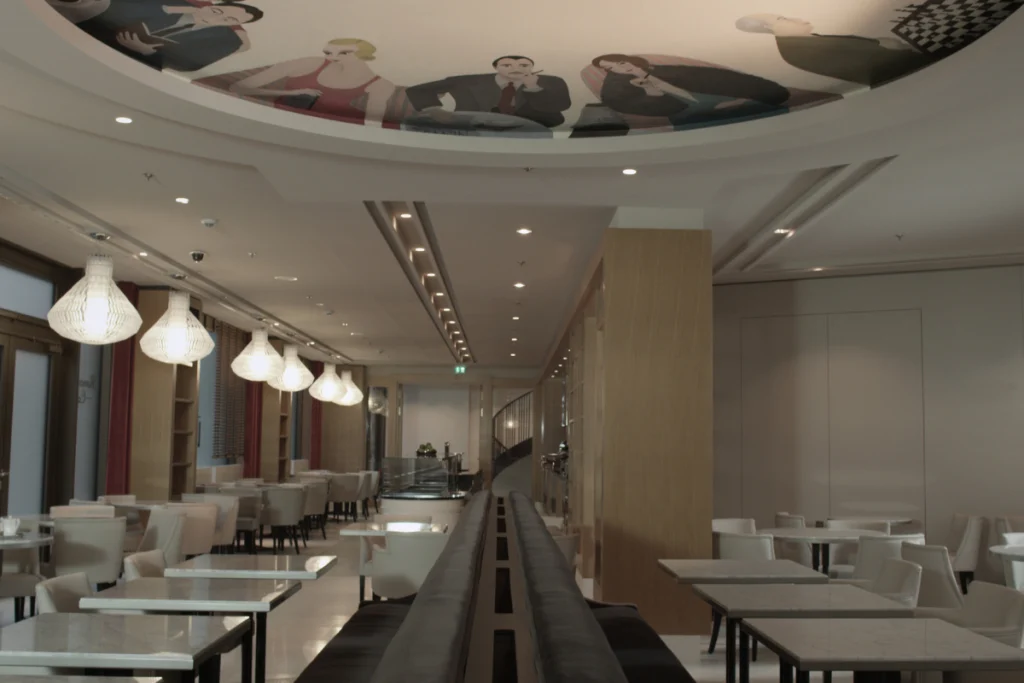
While MIPIM required aligning an entire industry, my role at the Zoofenster Berlin (€325M) was to design a bridge between various conflicting worlds, making this a pivotal role and a definitive case study in managing a multi-dimensional ‘Trust Deficit’.
As an Architect of Alignment, I had to reconcile the absolute institutional anonymity of the UAE Private Fund with a European market where transparency is the standard. I had to align the high-visibility prestige of global brands like Waldorf Astoria with the identity of Berlin—a culturally sensitive metropolis, with a fiercely protected social fabric, naturally suspicious of opaque foreign capital.
My role was to tailor a framework where these conflicting forces did not collide, bridge a « Trust Deficit », and provide a much-needed Social License to Operate to a prestige asset, by embedding Communications as a structural necessity to drive alignment.
Balancing these disparate worlds required a Narrative Architecture that neutralised suspicion and replaced friction with a framework that directly addressed local concerns.
We employed Cultural Anchoring to integrate the asset into the local bedrock via ‘soft power’. This was exemplified by the revival of the Romanische Café, where we commissioned the artist Emilia Jagica to create a bespoke ceiling installation.
This initiative was part of a broader strategy: from curating high-level artistic sponsorships for the 2014 Berlinale to the creation of the €170k Harvest Art Collection in partnership with the Universität der Künste Berlin—a unique initiative for the hotel industry.
This is paired with rigorous Institutional Diplomacy, navigating the tension between investor privacy and European transparency mandates by establishing a professional ‘front-end’ that ensures visibility without compromising core investor principles.
When this divide is successfully bridged, the asset is no longer seen as an « invader » but as a contributor. This alignment eliminates inertia and turns high-stakes complexity into a prestigious, award-winning success story.
By transforming a ‘Trust Deficit’ into a ‘Social License to Operate’, Narrative Architecture ensures that even the most complex investment survives the transition from a financial transaction to a legitimate local landmark.
In ‘Trust Deficit’ environments, Narrative Architecture is the primary lever to secure a ‘Social Licence to Operate’ and and bridging the capital-culture divide.
Engineering Social Stability: Crisis Leadership at APIE Littré
Communication, when executed with precision, is the art of navigating high-stakes complexity. It is fundamentally about Complex Project Management, ensuring every stakeholder, from a global CEO to a local community leader, is building toward the same blueprint.
The most visceral proof of a narrative’s value is in Crisis Management, where you align senior relationships across a complex ecosystem to ensure that Global Advocacy translates into measurable, ground-level impact.
Institutional Representation in a politically sensitive, high-exposure environment is not about « spinning » a story. Upon taking over the Presidency of APIE Littré for the Littré Kindergartener Parent Association (representing over 150 families), I didn’t just inherit long-standing systemic tensions like budgetary restrictions or infrastructure deficits: I faced a true « baptism of fire ».
The autumn of 2025 was marked by a series of revelations and a profound After-School Services crisis under the responsibility of the City of Paris, a crisis that significantly punctuated the Hôtel de Ville election cycle. The scale was unprecedented: nearly 80 facilitators were suspended across Paris, including dozens of investigations into sexual violence. Within this climate, where the after-school system relies heavily on short-term contracts amidst resource shortages and employment instability, the « Trust Deficit » between families and the administration reached a breaking point.
Moving from Global Advocacy to Local Stabilisation, I approached this local crisis as a mission of Strategic Influence and Corporate Diplomacy. The first stone of this edifice was laid before the crisis erupted: establishing fluid communication with the Senior Extracurricular Manager to instil a climate of trust, transparency, and empathy. We also opened a direct communication channel with the Paris City Hall Representative for our school borough, the CASPE 6-14 Director.
Subsequently, I managed the fallout of a 15-day strike and intense media pressure by pivoting from reactive messaging to a strategy of crisis communication and appeasement centred on transparency and safety. This was essential to restoring the vital link between parents and school officials.
I operationalised Narrative Architecture by auditing the strict application of safety protocols by the city representatives of our borough, and by codifying and following up on the rigorous safety and transparency standards instituted by the Senior Extracurricular Manager prior to the crisis.
By treating community representation as a form of Institutional Diplomacy, we successfully navigated a systemic crisis.
This Stakeholder Alignment led to a period of sustained social peace for our families and local teams. This crisis management was achieved alongside other key priorities for our mission: battling for pedagogical continuity regarding teacher replacements, involving high-level institutional mobilisation for emergency AESH support, and our record-breaking mobilisation for the 2025 Participatory Budget.
By transforming a systemic crisis into a structured dialogue, I have demonstrated that empathy-driven alignment is the most powerful engine for social stability and collective success.
As an Alignment Architect, I do not merely manage communication; I build the load-bearing walls that allow complex, often opposing ecosystems to converge. Whether it is a €325M real estate asset or a critical community crisis, the mission remains the same: eliminating inertia and transforming complexity into lasting impact.
In a ‘Crisis Context’, Narrative Architecture is the ultimate lever for aligning conflicting community interests and converting systemic crisis into a framework for collective success.
The Architect’s Blueprint
Communication, when done correctly, is the art of navigating complexity. It is about Complex Project Management that ensures every stakeholder—from a global CEO to a local parent—is building towards the same blueprint.
Communication, when treated as a luxury wrapping or an afterthought, guarantees the persistence of the Alignment Deficit.
In a world where value chains are fragmented and institutional friction is the norm, C-Suites can no longer rely on simple storytelling. Survival and conversion at scale require a rigorous, structural approach.
Narrative Architecture is not merely about transmitting messages; it is about engineering social stability, synchronising corporate diplomacy with operational reality, and securing a sustainable ‘Social Licence to Operate’. Whether navigating a €325M commercial asset portfolio or stabilising a critical community crisis, the methodology remains identical: breaking down cognitive silos to build a single, load-bearing framework for collective success.
The choice for modern leadership is clear: allow the deficit of misalignment to erode institutional trust and financial value, or invest in the blueprint that transforms complexity into lasting commercial power.
Kenza Brunet | Narrative Architect & Global Communications Director | → Connect on LinkedIn