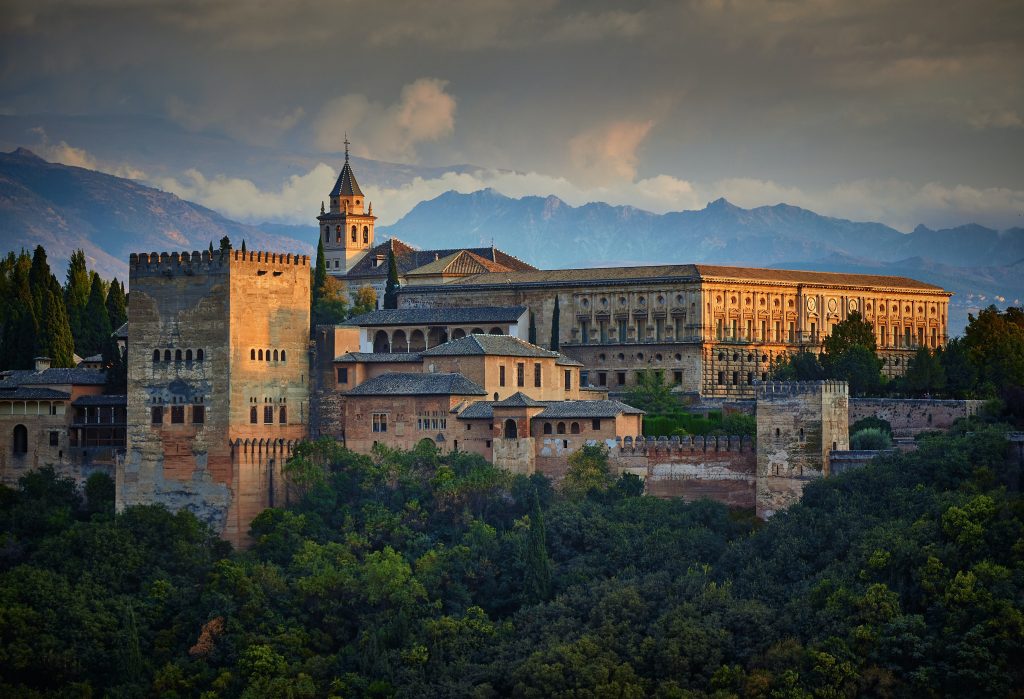
To me, the Alhambra is the most unique architectural treasure and exquisite wonder the world has to offer.
Studying a foreign language allows us to learn about the history, culture, and civilisation the language conveys.
I first read in Spanish class about the ‘Golden Age’ of al-Andalus, ‘الأندلس’, a succession of Islamic states in modern Spain, Portugal, and southern France at its greatest extent between 711 and 1492.
While I do not recall the nature or author of the actual text we analysed that day, I perfectly remember being enthralled by the narrative.
The story portrayed the rich heritage and cultural spectrum of the Umayyad province, focusing on the Caliphate of Córdoba (929-1031) by Abd al-Rahman III, a Umayyad ruler eager to equalise the Baghdadi cultural development before the taifas and before both the Berber Almoravid and Almohad dynasties and their discriminatory measures.
The narrative highlighted the mixing of ethnic, cultural, and religious communities in the Arab-Andalusian region, a social fabric drawn from Arab, Latin, Jewish, and Greek influences.
A melting pot where Jews and Christians adopted the lifestyle, language, habits, and customs of the new occupants.
The author also emphasised how Muslim Spain not only channelled the West to the East by transmitting scientific contributions from India, Persia, and China to Europe but also connected the past to the future—the antiquity to the Renaissance—by translating Hellenistic literature and Greek philosophy to the Christian world.
I could picture them all, the People of the Book, walking the streets of Córdoba or Granada, adorned with silk-lined hats and high-rise garments.
Averroes, Al Idrisi, Moïse Maimonides… all the scholars who enriched the heritage of Al-Andalus through the study of various disciplines: art, science, astronomy, philosophy, and poetry.
The author then described the Alhambra, one of the jewels of Islamic architecture, founded by Muhammad I Ibn al-Ahmar, the first ruler of the Nasrid dynasty and kingdom of Granada (1230–1492), the very last Muslim bastion of the Islamic age in Spain, before surrendering Granada.
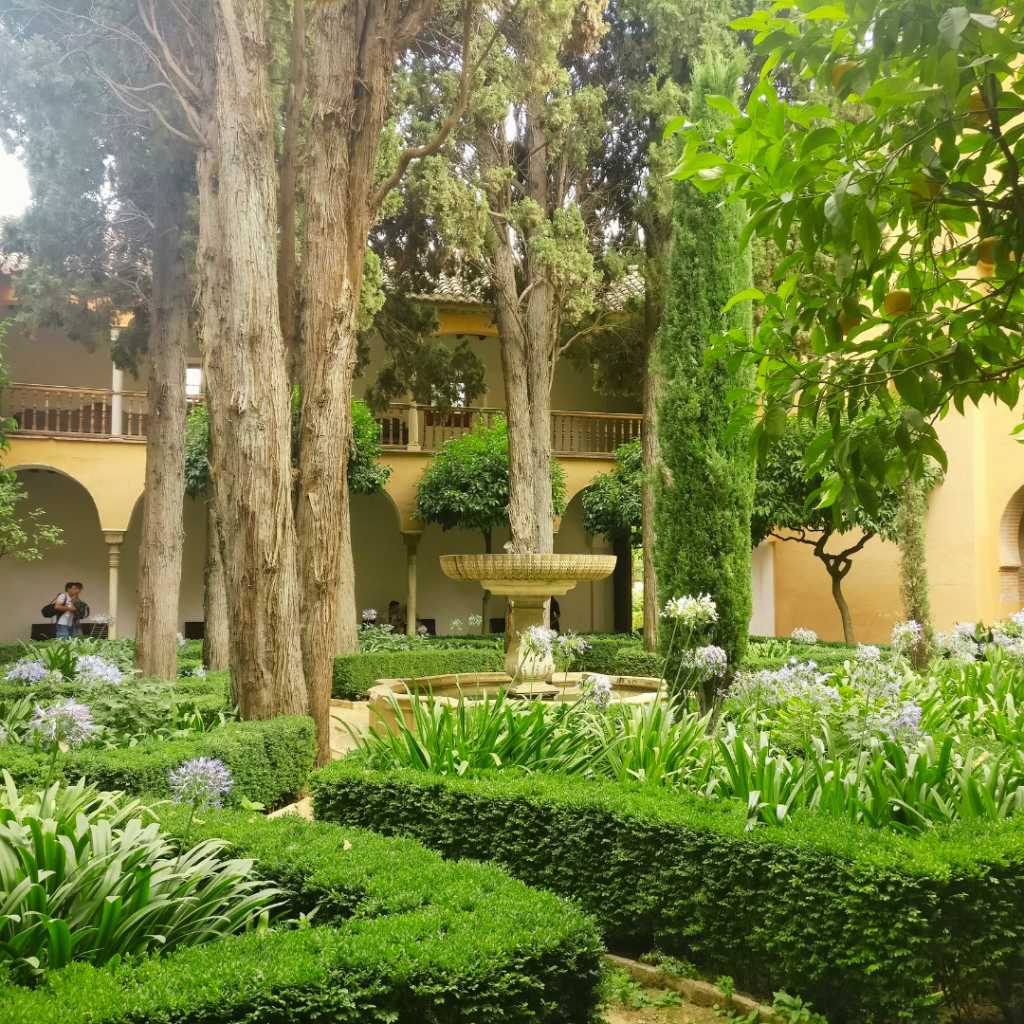
To this day, even after countless visits, wandering the Palacios Nazaríes, the summer palace enclosed within the Generalife gardens, remains my most thrilling experience.
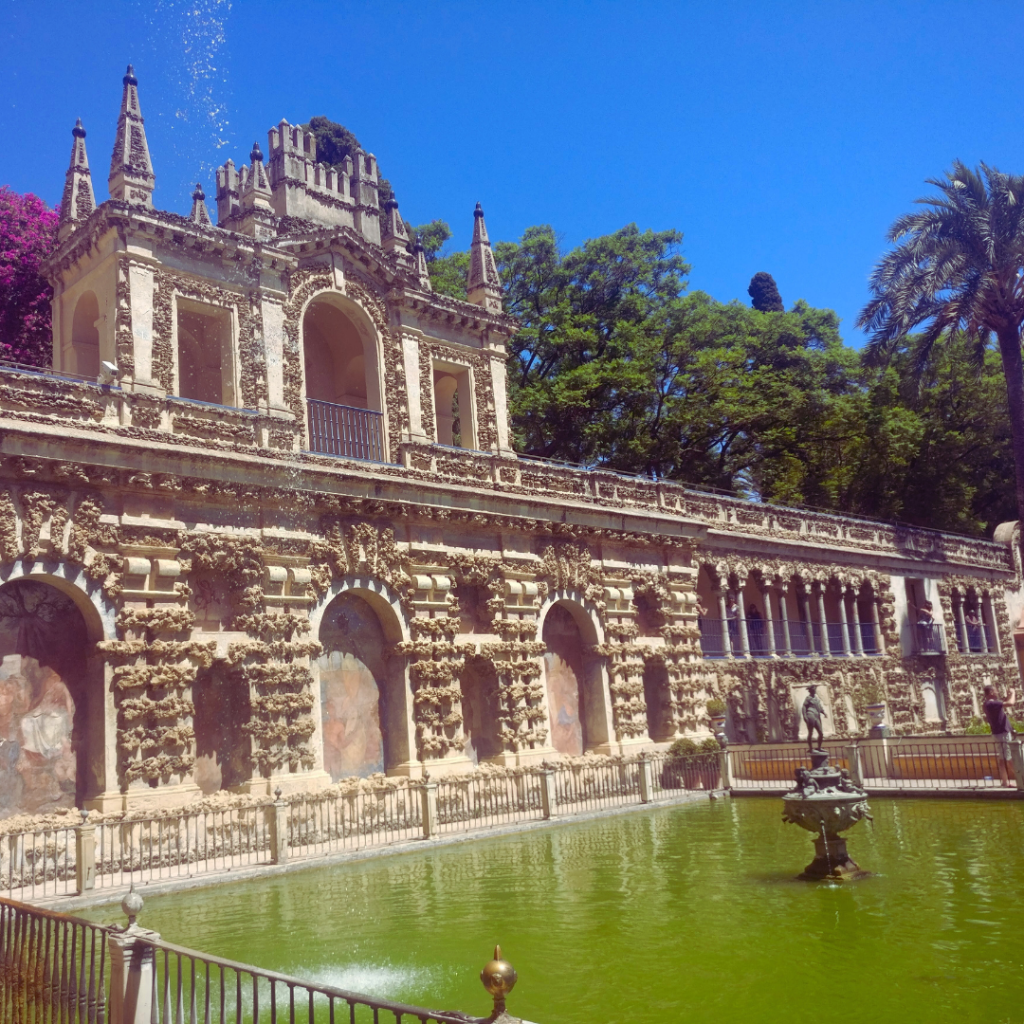
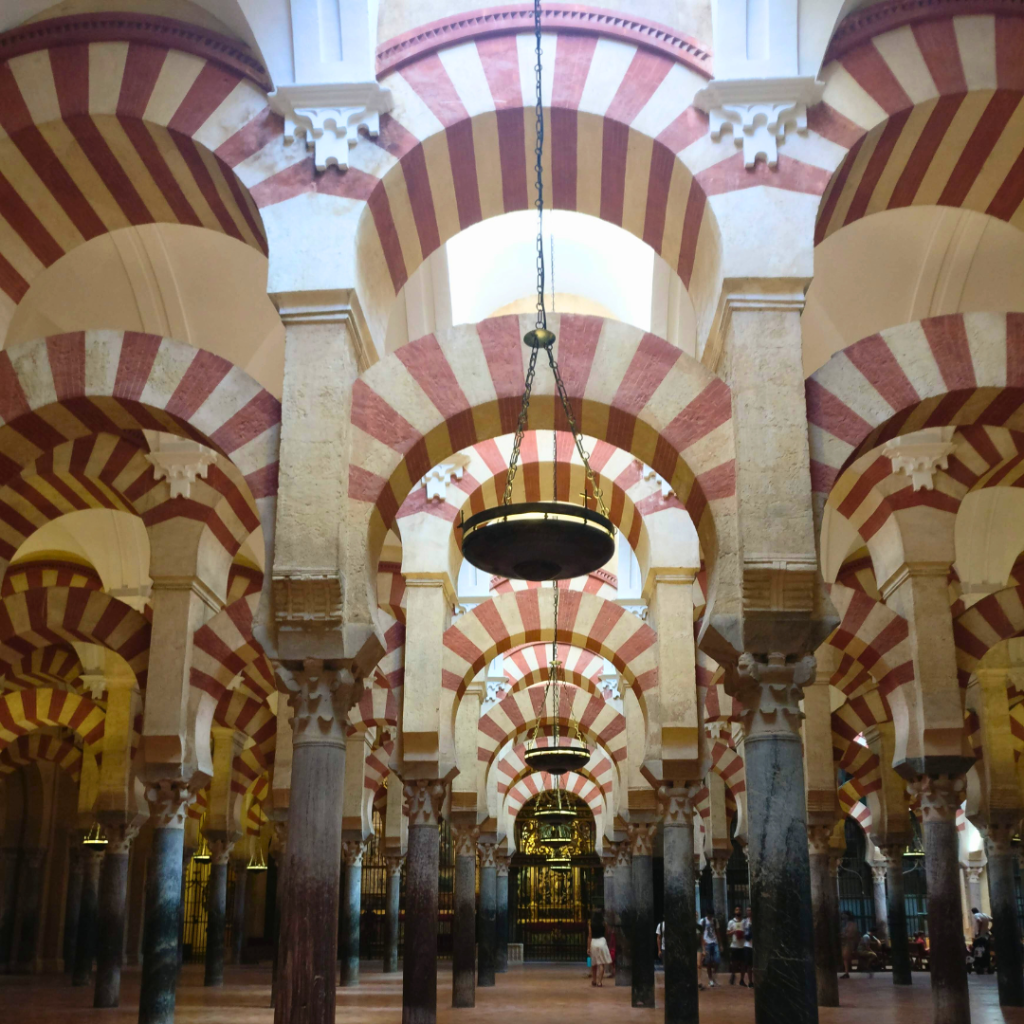
I usually combine my summer trips to Andalusia with a weekend gateway to the astounding Royal Alcázars of Seville (Reales Alcázares de Sevilla in Spanish, al-Qasr al-Muriq in Arabic), commonly known as the Alcázar of Seville, and the entrancing Mosque-Cathedral nested in the Omeyyade Madinat al-Zahra of Córdoba.
I cannot help but wonder how much we could all gain if we focused on building instead of contrasting, allowing more tolerance, and blending cultures.